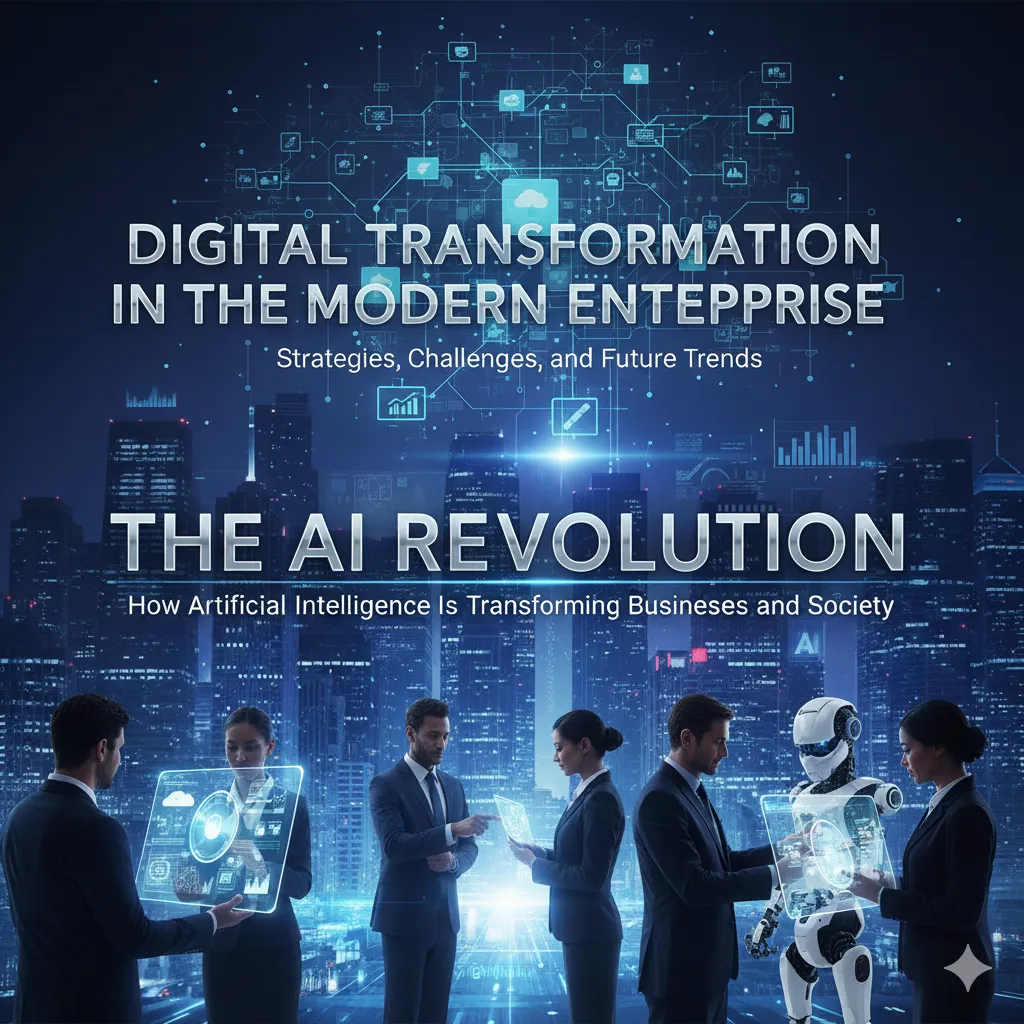
Digital Transformation in the Modern Enterprise: Strategies, Challenges, and Future Trends
Digital transformation has become a strategic priority for enterprises aiming to remain competitive in an increasingly technology-driven world. It goes beyond adopting new tools—it represents a fundamental shift in how organizations operate, deliver value, and engage with customers.
What Is Digital Transformation?
Digital transformation is the integration of digital technologies into all areas of a business, resulting in significant changes to processes, culture, and customer experiences. It enables organizations to respond faster to market demands, improve operational efficiency, and innovate continuously.
Rather than being a one-time initiative, digital transformation is an ongoing journey that evolves with technology and business goals.
Core Pillars of Digital Transformation
- Technology Modernization: Migrating from legacy systems to cloud-native and API-driven platforms.
- Process Automation: Streamlining workflows using automation and intelligent systems.
- Data-Driven Decision Making: Leveraging analytics and real-time insights to guide strategy.
- Customer-Centric Design: Delivering seamless, personalized, and omnichannel experiences.
Benefits for Enterprises
Organizations that successfully embrace digital transformation unlock measurable business benefits across departments.
- Improved agility and faster time to market
- Reduced operational costs through automation
- Enhanced customer satisfaction and loyalty
- Greater scalability and business resilience
Challenges in Digital Transformation
Despite its advantages, digital transformation presents several challenges. Resistance to change, skill gaps, data security concerns, and fragmented systems often slow progress.
To overcome these obstacles, leadership alignment, employee training, and a clear transformation roadmap are essential.
Role of Emerging Technologies
Technologies such as cloud computing, artificial intelligence, machine learning, and the Internet of Things (IoT) play a critical role in accelerating digital transformation. These tools empower enterprises to build smarter applications, automate complex tasks, and gain predictive insights.
Enterprises that adopt these technologies strategically are better equipped to adapt to future disruptions.
The Future of Digital Transformation
The future will see digital transformation becoming deeply embedded into business DNA. Organizations will focus on composable architectures, hyperautomation, and intelligent platforms that continuously evolve.
Success will depend on an organization’s ability to balance innovation with governance, security, and ethical responsibility.
Conclusion
Digital transformation is no longer optional—it is a necessity for modern enterprises. By adopting the right strategies, technologies, and mindset, organizations can drive sustainable growth, improve customer experiences, and stay ahead in an ever-changing digital economy.